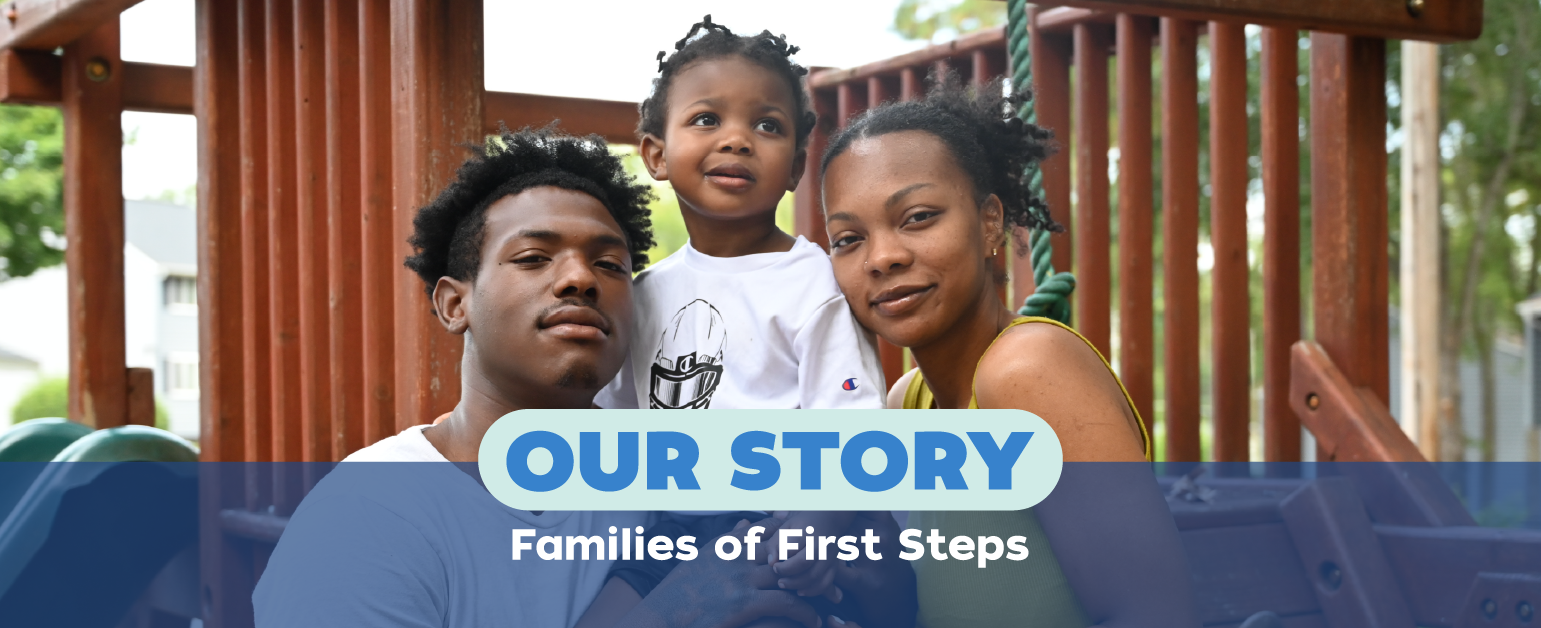
For many first-time parents, a flailing, crying, full-blown toddler tantrum can feel unpredictable, explosive, and impossible to manage, especially when a child is also navigating a developmental delay.
That was the case for Davianna Hicks and Joshua Stewart, whose three-year-old son, Dallas, was having frequent outbursts. Unsure how to help him, they reached out to Newberry County First Steps, where they were connected to Triple P (Positive Parenting Program), a parenting and family support program designed to prevent and treat behavioral and emotional problems in children up to age 12.
With their Triple P parent educator, Angela Baxter, Davianna and Joshua were introduced to simple, practical strategies for confidently managing their son’s behavior and promoting positive child development.
“When handling tantrums, most people think you can just ride it out or ignore them, but you can’t,” Angela explained. “Children still need guidance, no matter what they’re dealing with. If you wait too long, they won’t recognize discipline later when you try to introduce it.”
Angela added that programs like Triple P help parents identify subtle signs of struggle that are easy to overlook, giving parents tools to respond to their child with more understanding and support.
Tantrums often stem from a child’s unmet needs such as hunger, fatigue, overstimulation, or difficulty expressing emotions. “It could be your response, a situation they’re facing, or even a physical issue you’re unaware of like an earache or headache that they can’t communicate,” Angela explained.
Rather than reacting with frustration, parents are encouraged to remain calm and guide their children toward healthier coping skills. “When a child is having a tantrum in public, that can feel embarrassing,” Davianna admitted. “Your first instinct might be to yell, but instead we try to meet the child in the middle, calm them down, and shorten the tantrum while remaining calm.”
Joshua noticed the difference immediately:
“This program helped us problem-solve and stay in control instead of getting angry,” he said. “It taught us how to be more positive, understand what makes Dallas upset, and teach him how to manage his own emotions.”
Now, Dallas can better identify his emotions and communicate openly with his parents. “He'll kind of look for help a little bit more. Instead of just getting angry, he'll ask us for help and tell us what he needs or how he is feeling,” he said.
Through role-playing, exercises, and practical strategies, the couple practices staying calm, redirecting their child, and offering simple alternatives instead of escalating frustration. For example, instead of scolding Dallas for drawing on the floor with a marker, Joshua redirected him by offering paper and guiding him to trace his ABCs.
Davianna also practiced breathing techniques, relaxation strategies, and even pressure point exercises that helped de-escalate difficult moments. Over time, the same patience and self-regulation skills they used with their son began to shape how they responded to everyday frustrations.
“I used to get angry really fast, but Triple P has helped me not get so angry anymore,” Davianna said. “For example, I took Dallas to an appointment, and they didn’t see us. I initially would have been like, ‘We came all the way down here. You better fit us in,’ but I just accepted it, and we rescheduled, and no one got upset.”
Instead of reacting impulsively, the couple finds themselves pausing, taking a breath, and reassessing situations with more composure. Moment like this show how techniques extend beyond parenting but become part of a broader mindset shift.
For Davianna and Joshua, Triple P has been more than just a program. It’s been a lifeline for their family, and the impact goes beyond the strategies.
By learning to understand Dallas’s needs and respond with patience, the couple has transformed daily struggles into opportunities for growth. What started out as a tool to calm their child and manage his behavior turned into an opportunity to improve their own emotional balance, communication, and create a calmer atmosphere at home for all.
“I’m really glad we started the program,” Davianna said. “I feel like it set us on the right path for a positive future with him.”
Learn more about Triple P and other Parenting Programs offered by SC First Steps.
Topics:
Parenting